TOOLS · 7 MIN READ
Electric Spin Scrubber vs Manual Scrubbing: Which Is Better?
A balanced look at when a powered spin scrubber helps and when a sponge or brush is still the smarter choice.
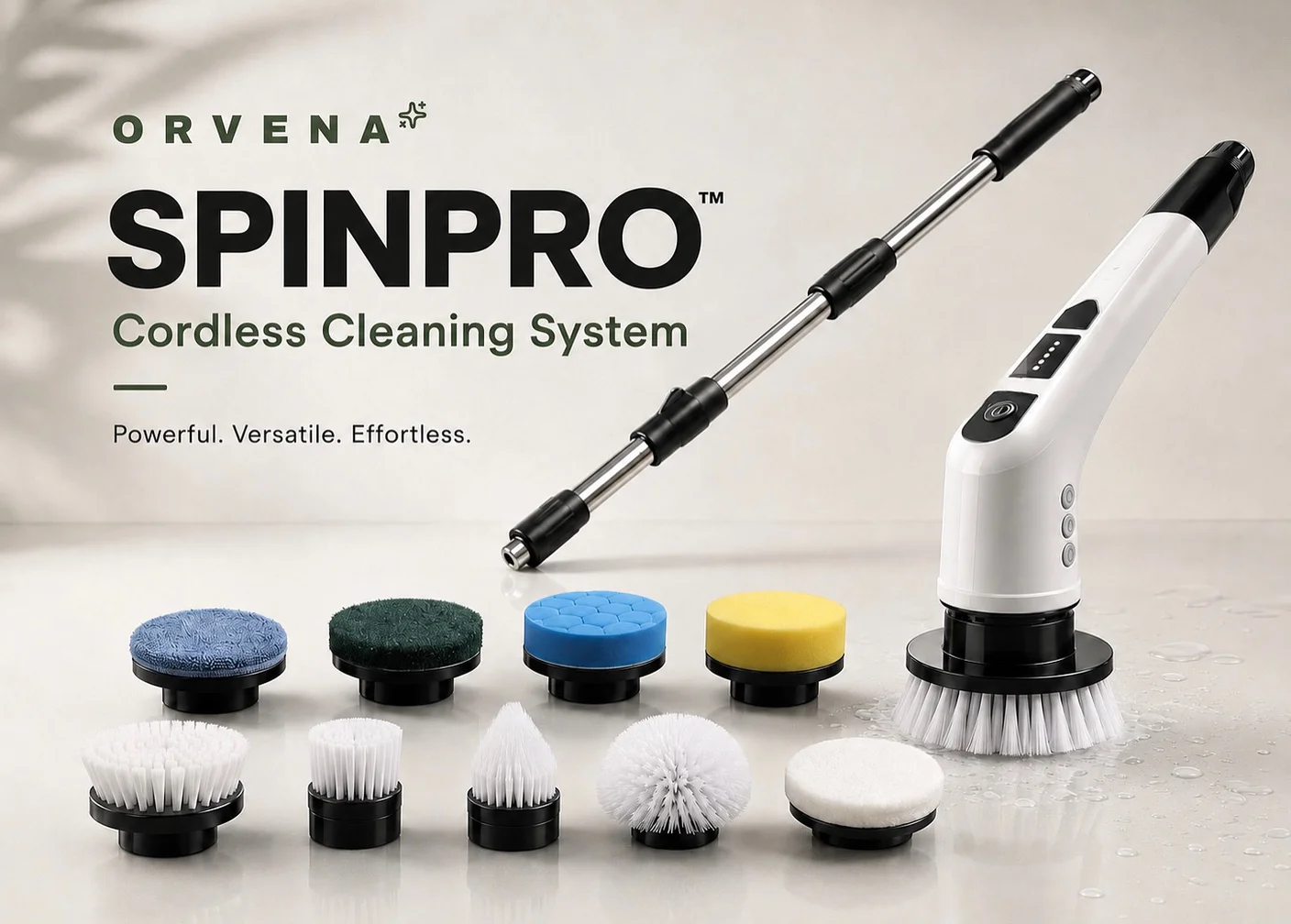
If you are trying to decide between an electric spin scrubber and a plain brush or sponge, the honest answer is that the right tool depends on the job, not the marketing. Powered scrubbers save effort on large, repetitive, or grimy surfaces. Manual scrubbing still wins for small spots, delicate finishes, and moments when you just need to wipe something down without pulling out equipment.
This guide compares both approaches across the factors that actually matter around the house: effort, control, reach, speed, and cost, so you can match the tool to the task instead of assuming one method is always better.
Physical effort
Manual scrubbing relies entirely on your arm, wrist, and shoulder to generate friction. For light dust or a quick wipe, that is not a problem. But for baked-on soap scum, grout haze, or a tub that has not been deep cleaned in months, repeated hand pressure adds up fast and your arm tires long before the job is done. A powered scrubber like SpinPro handles the repetitive motion for you, which is where most people notice the difference: less strain over a long session, not necessarily less time on a single small mark.
Control and precision
This is where manual scrubbing has a real edge. A hand brush or old toothbrush lets you feel exactly how much pressure you are applying and adjust instantly, which matters on delicate or unfamiliar finishes. A compact tool like Detail closes some of that gap for powered cleaning because its smaller head and interchangeable brushes are built for controlled, precise work in tight areas, but for a single scratch-prone surface you are testing for the first time, your hand is still the safer starting point.
Reach into tight spots
Getting into corners, along grout lines, around faucet bases, or into shower tracks is awkward by hand because your fingers and a brush handle are a fixed shape. Detail is designed with a compact body and small head sizes to work into those tight areas, while SpinPro's extendable handle helps you reach higher and lower surfaces without climbing on furniture. Manual tools can reach these spots too, but often only with an angled brush and more patience.
Speed on large surfaces
For big, repetitive areas like a full tile floor, a shower wall, or a large tub, a powered spin scrubber typically covers ground faster because the rotating head does continuous work while you focus on guiding it across sections. Manual scrubbing on the same area means your own repeated motion is the only source of friction, which is fine for a small bathroom but becomes tedious across a larger surface.
Delicate or uncertain surfaces
Before you start
Always follow the instructions on your cleaner and the care guidance for your surface, ventilate the space as needed, and test any product or tool on a small hidden area first. Never mix cleaning chemicals.
When you are not sure how a surface will react, such as an aged finish, a natural stone, or a painted item, manual scrubbing with a soft cloth or brush is usually the more cautious starting point because you can stop the moment you see any change. Once you know a surface tolerates cleaning well, a powered tool with a soft brush head can take over the routine maintenance.
Cost, storage, and maintenance
A sponge or brush costs little, takes up almost no space, and needs no charging. A cordless scrubber is a bigger investment upfront, needs a charge before use, and its brush heads wear out and need replacing over time. If you clean occasionally and lightly, manual tools may be all you need. If you are cleaning multiple rooms regularly, the convenience of a rechargeable tool with swappable heads can be worth the extra planning.
When manual scrubbing still wins
- A single small stain or spot that takes seconds to wipe by hand
- Very delicate or unknown finishes you have not tested cleaning products on yet
- No charged battery available and you need to clean right now
- Occasional, light, quick cleaning where setup time outweighs the benefit
Which should you choose?
- 1Small, occasional, or delicate job: reach for a hand brush or sponge
- 2Tight corners, tracks, or fixtures you clean often: a compact tool like Detail can help
- 3Large floors, tubs, or shower walls done regularly: a scrubber like SpinPro saves effort
- 4Whole-home routine across several rooms: a bundle pairing both tools covers more situations
There is no single right answer here. Many households end up using both: a hand brush for quick spot cleaning and a powered scrubber for the bigger, recurring jobs. Choosing based on the specific task, rather than assuming one method is always superior, is what actually saves time and effort in the long run.
Cleaning tools from ORVENA
Cordless tools built for everyday cleaning: SpinPro for reach and larger surfaces, Detail for precision work, Extra 18PC for replacement and specialty accessories.
WRITTEN BY
ORVENA Editorial Team
HOME CLEANING GUIDES
The ORVENA editorial team writes practical, tested-in-the-real-world cleaning guides. Every method here is written to be safe for common household surfaces, and product notes are limited to what we can confirm about our own tools — SpinPro, Detail and Extra 18PC.
PUBLISHED AUGUST 18, 2026
ORVENA JOURNAL
Get new cleaning guides by email
Practical guides for grout, glass, tubs and tile — plus ORVENA product updates. No spam, and you can opt out at any time.
Keep reading
TOOLS
Cordless Cleaning Tools: What Actually Makes Them Useful?
BATHROOM
How to Clean Hard-to-Reach Bathroom Areas
TOOLS