TOOLS · 8 MIN READ
Cleaning Brush Head Guide: Which Attachment Should You Use?
A practical guide to matching brush head shape and stiffness to the surface you are cleaning, from flat tile to tight corners and tracks.
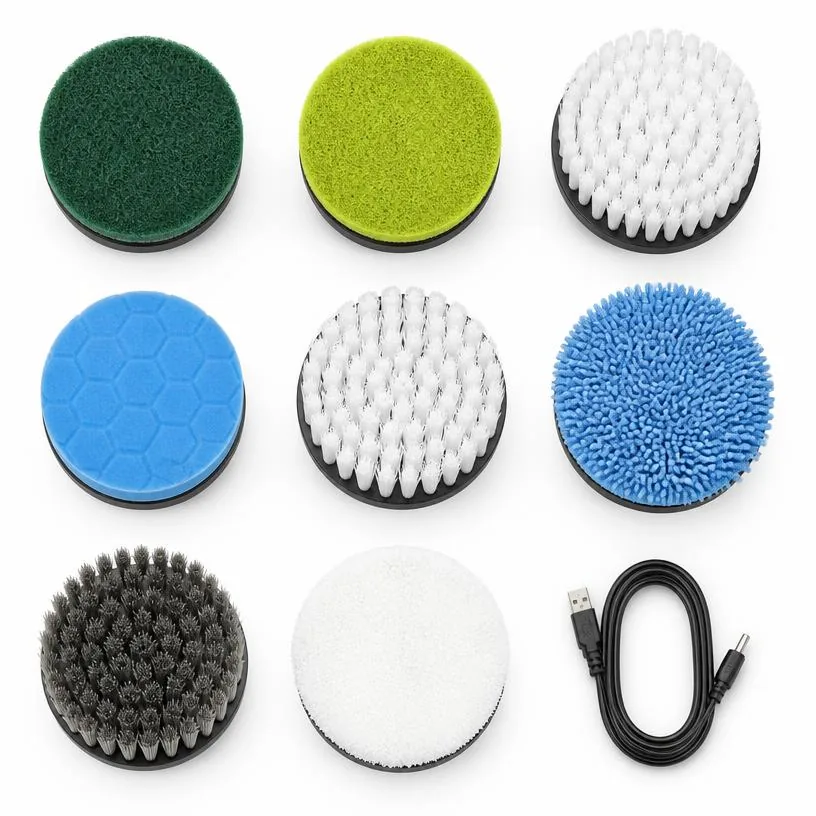
Most disappointing cleaning results come down to one thing: the wrong brush head on the wrong surface. A stiff flat brush dragged into a tight corner will miss the grime entirely, while a delicate pad pushed across a heavily soiled floor will barely make a dent. Once you understand the handful of shape and stiffness categories that brush heads fall into, choosing the right one becomes automatic.
Brush head categories by shape
- Flat or large round heads — designed for broad, flat surfaces like floors, shower walls, and countertops, where coverage matters more than precision.
- Dome or contoured heads — shaped to follow curves, making them suited to tubs, sink basins, and other rounded surfaces.
- Narrow or corner-style heads — built for edges, corners, and the seams where two surfaces meet, such as where a tub meets the wall.
- Small conical or pointed heads — sized for tight gaps, grout lines, and tracks where a wider head simply cannot fit.
- Soft pads — intended for delicate or polished surfaces that need gentle contact without abrasion.
These categories describe general shape and use, not any single product's exact lineup. Always check what came with your tool and use the shape that matches your surface rather than forcing a head into a job it was not shaped for.
Matching stiffness to the surface
Shape gets a brush into the right spot; stiffness determines whether it cleans effectively without causing damage. As a general rule, firmer bristles suit tougher, more durable surfaces like textured floor tile or grout, while softer bristles or pads suit surfaces that scratch or dull more easily, such as glass, polished chrome, or coated finishes.
Before you start
Always follow the instructions for both your cleaning product and the surface manufacturer's care guidance. Ventilate the area as needed, and test any brush head and cleaner combination on a small, inconspicuous area first. Never mix cleaning chemicals together.
A simple surface-to-head checklist
- 1Floors and shower walls — flat or large round head, firmer bristle.
- 2Tubs and sink basins — dome or contoured head, medium bristle.
- 3Corners and wall-to-tub seams — narrow or corner-style head, medium bristle.
- 4Grout lines and door tracks — small conical or pointed head, firmer bristle for grout, softer for tracks with delicate seals.
- 5Glass, chrome, and polished or coated fixtures — soft pad, gentle contact only.
How ORVENA tools are set up
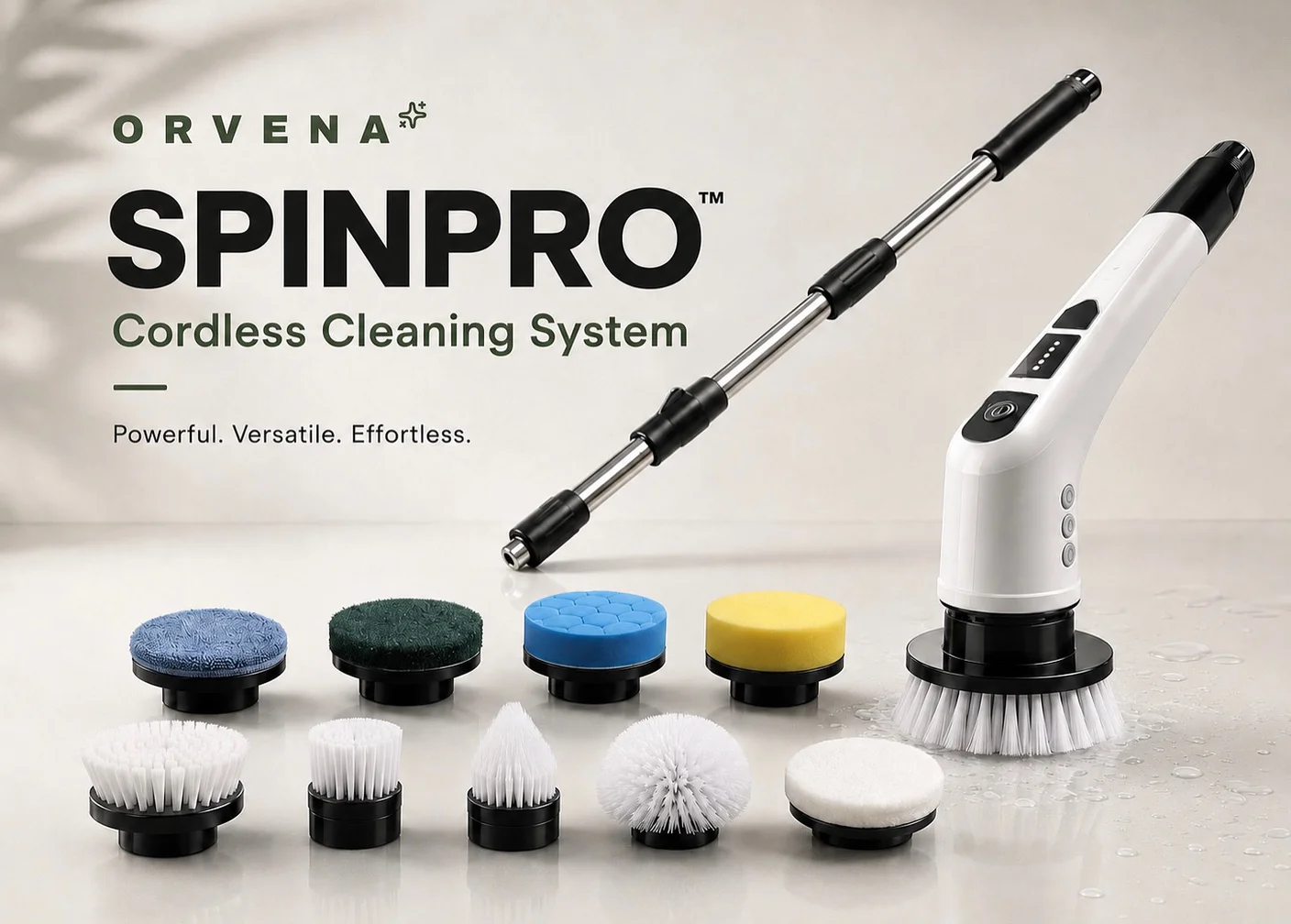
SpinPro is presented as a nine-head system, giving you a range of shapes and stiffness levels to cover larger surfaces like floors, tubs, tile, and shower walls, along with hard-to-reach areas thanks to its extendable handle. Detail is a compact 5-in-1 electric spin scrubber that ships with five replaceable brush heads, sized for close precision work around sinks, taps, corners, and tracks.
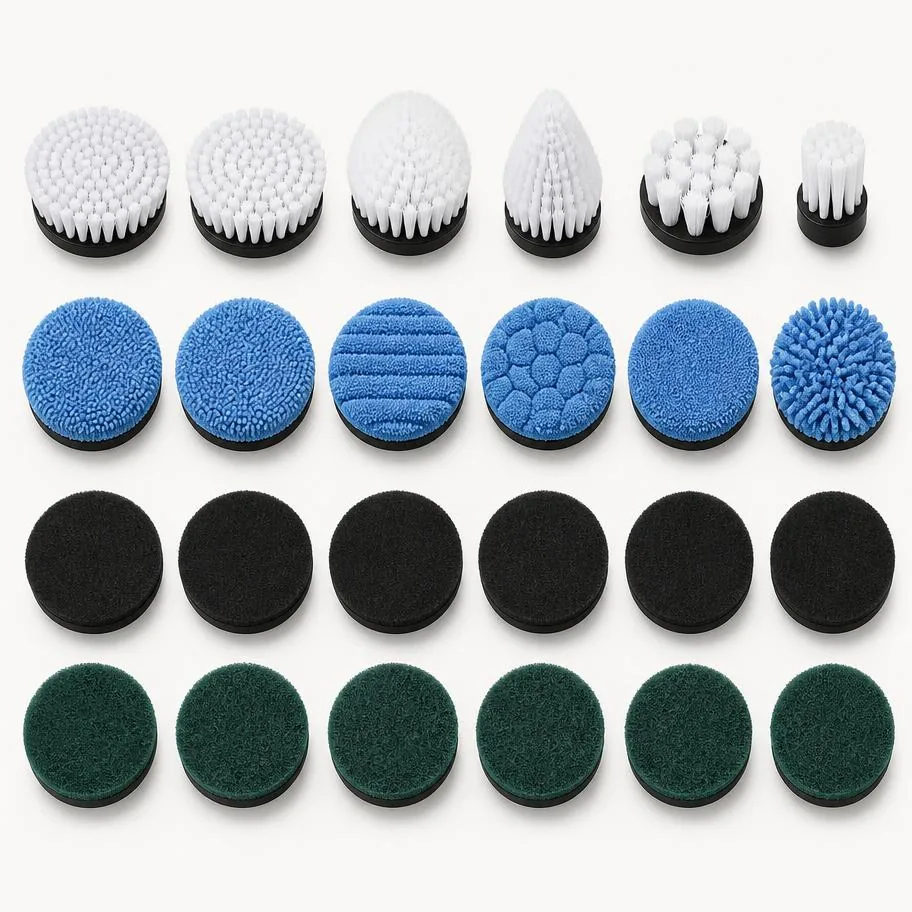
Extra 18PC is a separate accessory kit: an 18-piece set of replacement and specialty rotary scrubber heads. It is not designed or sold as an add-on for SpinPro or Detail, so do not assume cross-compatibility between them. If you use a separate rotary scrubber tool, Extra 18PC is worth knowing about for that tool specifically.
Replacing worn heads
Bristles wear down with use, and a worn head loses its ability to agitate grime effectively no matter how good your technique is. Watch for bristles that look splayed, flattened, or visibly shorter than when new, and for pads that have become thin or frayed at the edges. Cleaning performance drops off gradually, so if a surface that used to come clean easily now feels like it needs extra passes, a worn head is worth checking first.
Cleaning and drying heads after use
- Rinse each head under running water immediately after use to remove soap, grime, and cleaner residue before it dries in place.
- Squeeze out excess water from pads and bristle bases rather than leaving them saturated.
- Let heads air dry fully in an open spot before storing them, to avoid trapped moisture.
- Store heads separately or in a dedicated holder so bristles are not crushed out of shape.
- Rotate between heads if you have duplicates for the same job, so no single head wears out faster than the rest.
A few seconds of rinsing and drying after every use keeps brush heads performing consistently for far longer, and it means you are never reaching for a grimy attachment on your next cleaning pass. Combined with matching the right shape and stiffness to each surface, this simple routine is most of what it takes to get reliable, even results every time you clean.
Cleaning tools from ORVENA
Cordless tools built for everyday cleaning: SpinPro for reach and larger surfaces, Detail for precision work, Extra 18PC for replacement and specialty accessories.
WRITTEN BY
ORVENA Editorial Team
HOME CLEANING GUIDES
The ORVENA editorial team writes practical, tested-in-the-real-world cleaning guides. Every method here is written to be safe for common household surfaces, and product notes are limited to what we can confirm about our own tools — SpinPro, Detail and Extra 18PC.
PUBLISHED AUGUST 18, 2026
ORVENA JOURNAL
Get new cleaning guides by email
Practical guides for grout, glass, tubs and tile — plus ORVENA product updates. No spam, and you can opt out at any time.
Keep reading
TOOLS
Electric Spin Scrubber vs Manual Scrubbing: Which Is Better?
TOOLS
Cordless Cleaning Tools: What Actually Makes Them Useful?
TILE & FLOORS