TILE & FLOORS · 8 MIN READ
The Best Way to Clean Tile Floors Without Spending All Day Scrubbing
A step-by-step workflow for cleaning tile floors thoroughly without spending your whole day on your knees.
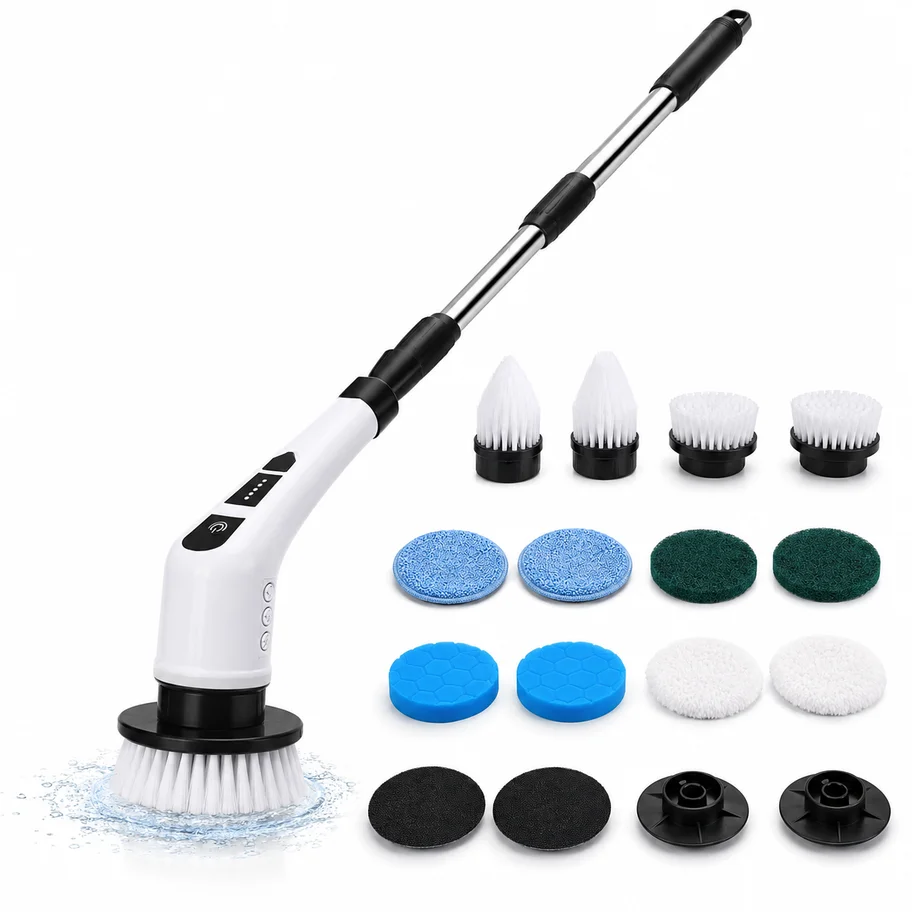
The best way to clean tile floors is to work in a set order: clear loose debris first, use a cleaner suited to your tile type, treat grout lines and tile faces as separate jobs, and work in manageable sections so you are not dragging dirty water across a floor you already cleaned. Skipping any one of these steps is usually why tile floors end up taking far longer than they need to.
Sweep or vacuum first
Mopping over loose dirt, hair, or grit just turns it into mud and drags fine debris around the room instead of removing it. A quick sweep or vacuum pass before you introduce any liquid saves you from having to redo sections later, and it is the single fastest way to make the rest of the job easier.
Choose a cleaner for your tile type
Before you start
Always follow the instructions on your cleaning product and any care guidance for your specific tile or stone, ventilate the room while cleaning, and test on a small hidden area first. Never mix cleaning chemicals.
Ceramic and porcelain tile generally tolerate a wider range of everyday cleaners, but natural stone tile such as marble, travertine, or slate needs more caution since some common cleaning products can dull or damage the finish over time. If you are not certain what your floor is made of or how it was sealed, check the manufacturer's care guidance before choosing a product, and test it in a small corner first.
Grout lines vs. tile faces
Grout and tile are not the same job. Grout is porous and traps grime below the surface, so it usually needs a bit of dwell time with cleaner and some direct brushing to lift buildup. The tile face itself is far less porous and generally just needs a wipe or light scrub to clear surface residue. Trying to clean both with the same single pass is one of the biggest reasons floors look only half-clean afterward: the grout lines get a quick swipe from a mop while the actual dirt sits below the surface untouched.
Mopping vs. a powered brush workflow
A standard mop is fine for light daily maintenance, but it relies on repeated passes to generate any real scrubbing friction, which is where a lot of the time on tile floors actually goes. A cordless spin scrubber applies continuous rotating friction to the grout and tile as you guide it, which can clear buildup in fewer passes than manual mopping alone. SpinPro is built as a nine-head system suited to floors and grout lines, with an extendable handle so you are not kneeling to work on lower sections or reaching under furniture edges.
Work in manageable sections
- 1Divide the floor into sections you can comfortably finish before the cleaner dries
- 2Apply cleaner to one section and let it sit briefly if the product instructions suggest dwell time
- 3Scrub grout lines first, then the tile faces within that same section
- 4Rinse the section with clean water before moving to the next
- 5Change your rinse water once it looks visibly dirty rather than pushing grime around with dirty water
Rinsing and drying to avoid streaks and slips
Leftover cleaner residue is what causes the dull, streaky look on tile after it dries, so a rinse pass with plain water after scrubbing makes a real difference. Once rinsed, dry the floor with a clean towel or mop rather than letting it air dry, both for a streak-free finish and because a wet tile floor can be slippery until it is fully dry.
A simple weekly and monthly routine
- Weekly: sweep or vacuum, then a light mop pass over the whole floor
- Monthly: a full section-by-section clean with dedicated attention to grout lines
- As needed: spot-treat any fresh spills right away so they do not have time to settle into grout
Keeping to a light weekly pass and a more thorough monthly session prevents grime from building up to the point where it needs heavy scrubbing at all. Tile floors are far easier to maintain than to restore, and a consistent, simple routine is what actually keeps the all-day scrubbing sessions from happening in the first place.
Cleaning tools from ORVENA
Cordless tools built for everyday cleaning: SpinPro for reach and larger surfaces, Detail for precision work, Extra 18PC for replacement and specialty accessories.
WRITTEN BY
ORVENA Editorial Team
HOME CLEANING GUIDES
The ORVENA editorial team writes practical, tested-in-the-real-world cleaning guides. Every method here is written to be safe for common household surfaces, and product notes are limited to what we can confirm about our own tools — SpinPro, Detail and Extra 18PC.
PUBLISHED AUGUST 18, 2026
ORVENA JOURNAL
Get new cleaning guides by email
Practical guides for grout, glass, tubs and tile — plus ORVENA product updates. No spam, and you can opt out at any time.
Keep reading
TILE & FLOORS
How to Clean Bathroom Grout Without Scrubbing for Hours
TOOLS
Cordless Cleaning Tools: What Actually Makes Them Useful?
TOOLS