BATHROOM · 7 MIN READ
How to Clean a Bathtub Faster and With Less Effort
An efficient bathtub cleaning workflow: dwell time, top-to-bottom sequence, powered scrubbing, and a routine that cuts effort.
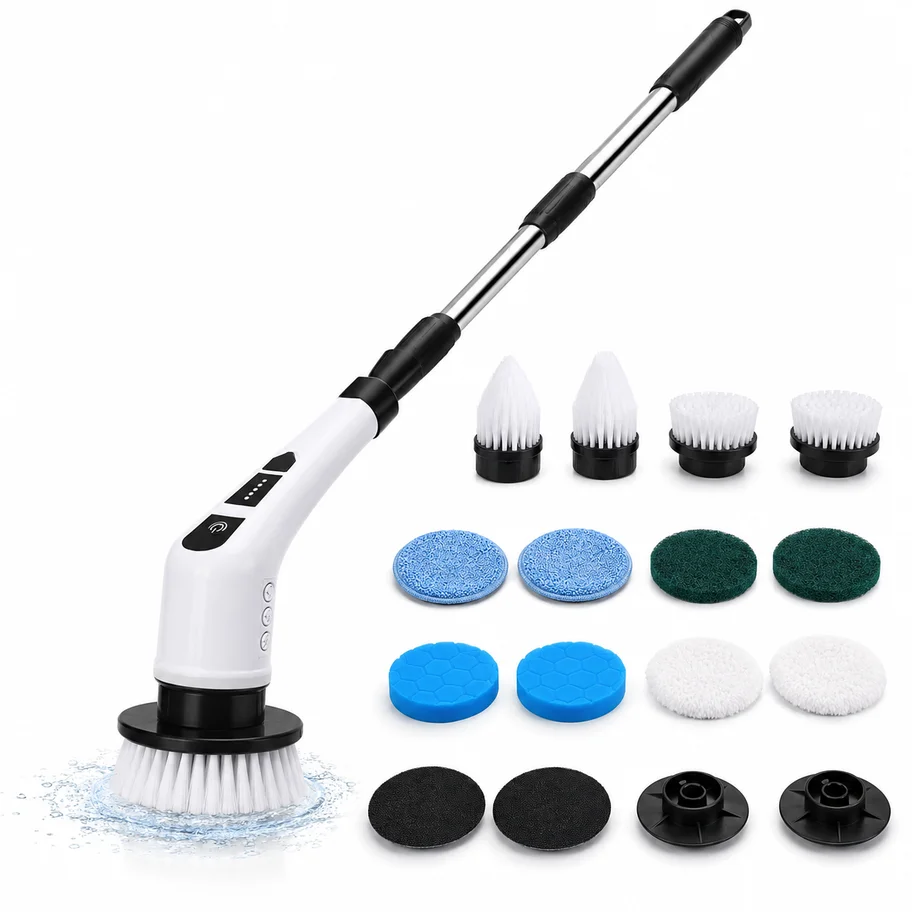
Cleaning a bathtub faster usually is not about scrubbing harder, it is about sequencing the job so the cleaner does more of the work while you do something else. A curved surface like a tub also benefits from a tool that can follow its shape evenly, rather than a flat cloth pressed into corners. Here is a workflow that gets a tub properly clean without turning it into a half-day project.
An efficient workflow, start to finish
- 1Clear the tub of bottles, toys, mats, and anything else sitting in it, so every surface is accessible.
- 2Rinse the tub with warm water to loosen surface dust, hair, and loose grime before applying any product.
- 3Apply a cleaner suited to your tub material across the surface, including the walls if your tub has them, and let it dwell for the time recommended on the label.
- 4While the cleaner sits, use those few minutes to clean the sink, mirror, or another nearby surface instead of waiting idle.
- 5Scrub the tub working top to bottom, starting with any walls or upper surfaces first, then the main basin, then the edges and drain area last.
- 6Rinse thoroughly with clean water, checking that no cleaner residue remains, especially in corners.
- 7Dry the surface with a towel or squeegee to reduce water spotting and slow future buildup.
Before you start
Check that any cleaner you use is labelled safe for your tub's material, follow the product instructions, and ventilate the bathroom. Test unfamiliar products on a small, inconspicuous area first, and never mix cleaning chemicals together.
Why top-to-bottom sequencing saves time
Cleaning from the top down means any drips or residue that fall while you scrub upper surfaces land on areas you have not cleaned yet, rather than back onto a section you already finished. This small ordering choice means you are not re-cleaning the same spot twice, which adds up over the course of a full tub.
Powered scrubbing for large, curved surfaces
A bathtub's basin is one continuous curved surface, and covering it evenly by hand takes a lot of repetitive motion. This is where a powered spin scrubber tends to save the most time, since it maintains consistent contact and pressure as you move it across the curve, rather than you having to reposition your wrist and apply force with every pass.
Edges, corners, and the drain area
The tub's edges, corner seams, and the area around the drain tend to collect more grime than the open basin because they are harder to reach with a broad wiping motion. A smaller brush head, or a detail tool built for tight spaces, works well here once the main surface is done. Give these areas a little extra dwell time if they look heavily soiled, rather than pressing harder with the same brush you used on the flat surface.
Rinse and dry to slow future buildup
A tub that is rinsed and dried after cleaning stays cleaner longer, because leftover moisture and residue are exactly what soap scum and mineral deposits need to start forming again. A quick squeegee pass or towel wipe at the end of your cleaning routine, and ideally after regular baths or showers too, meaningfully reduces how often you need a deep clean.
Weekly vs. monthly routine
A light weekly pass, rinsing the tub and wiping down the main surfaces with a mild cleaner, keeps everyday grime from settling in. A more thorough monthly clean, following the full workflow above with proper dwell time and attention to edges and the drain area, handles the buildup that a quick weekly wipe will not fully catch. Splitting the work this way means neither session takes very long.
Acrylic, enamel, and stone: a caution
Not all tubs are the same material, and what is safe on one can dull or damage another. Acrylic tubs can be more sensitive to abrasive cleaners and pads than enamel-coated cast iron or steel, while natural stone tubs often need cleaners formulated specifically for stone to avoid etching or discoloration. Before you start any routine, confirm your tub's material and check that your cleaner and brush choice are both labelled appropriate for it.
Cleaning tools from ORVENA
Cordless tools built for everyday cleaning: SpinPro for reach and larger surfaces, Detail for precision work, Extra 18PC for replacement and specialty accessories.
WRITTEN BY
ORVENA Editorial Team
HOME CLEANING GUIDES
The ORVENA editorial team writes practical, tested-in-the-real-world cleaning guides. Every method here is written to be safe for common household surfaces, and product notes are limited to what we can confirm about our own tools — SpinPro, Detail and Extra 18PC.
PUBLISHED AUGUST 18, 2026
ORVENA JOURNAL
Get new cleaning guides by email
Practical guides for grout, glass, tubs and tile — plus ORVENA product updates. No spam, and you can opt out at any time.
Keep reading
TILE & FLOORS
How to Clean Bathroom Grout Without Scrubbing for Hours

GUIDES
How Often Should You Deep Clean Your Bathroom?
TOOLS